Lire l'article


The employee hub is establishing itself as the cornerstone of the employee experience by unifying business tools and communication within an intelligent interface. This centralization reduces digital fatigue and automates HR processes, ensuring a major productivity gain. By optimizing onboarding and training, this sovereign platform sustainably strengthens engagement and talent retention.
Successful onboarding increases new talent retention by 82%, a figure that underscores the importance of a perfectly structured welcome. But beyond integration, how do you maintain this level of engagement throughout your employees' careers?
The dispersion of digital tools often creates fatigue that hinders your teams' daily productivity. We'll see how the employee hub now stands as the new standard for unifying your digital ecosystem and sustainably streamlining the work experience.
The employee hub centralizes HR tools, internal communication, and business applications on a single, sovereign interface. Unlike the static intranet, it automates processes through AI to streamline the employee experience right from onboarding.
This modern platform marks a break from older models to become the beating heart of your organization.
Wobee transforms top-down broadcasting into a true two-way exchange space. Employees are no longer mere passive readers. They interact directly with the company's strategic information.
This dynamic interface offers content updated in real time based on your profile. To understand this evolution, check out our guide on the modern company intranet. It's a bit like moving from a paper newspaper to an interactive social network.
Siloed information finally disappears. A continuous, personalized flow now feeds every department.
The HRIS focuses on pure administrative management such as payroll or leave. By contrast, the employee hub supports the work experience and daily engagement of teams.
These two tools are complementary for structuring your digital ecosystem.
The HRIS manages the contract; the employee hub manages the human being and their daily operational life.One secures data, the other unleashes productivity.
To explore this synergy further, discover how to optimize your HR intranet for employee management. This distinction ensures lasting adoption by your talent.
The Employee Hub brings together your office software and specific business applications into a single access point. This centralization allows you to carry out your daily missions without having to look for your tools everywhere.
You thus reduce the digital fatigue caused by constant switching between too many open tabs. Smooth navigation greatly promotes effective teamwork and limits unnecessary technical interruptions.
Employees immediately gain focus on their priority tasks. Less wasted time means more energy for creativity and strategic thinking.
Artificial intelligence now automates your recurring HR requests, such as submitting leave requests or generating certificates. These digital agents handle administrative flows without manual human intervention.
Semantic search across the document base offers valuable time savings by finding the exact information. You access strategic resources without browsing through complex or outdated folders.
| Task | Traditional method | With an intelligent Hub |
|---|---|---|
| Document search | Lengthy manual navigation | Instant AI-powered search |
| HR request | Emails and forms | Automated assistant |
| Tool access | Multiple passwords | Unified interface |
| Onboarding | Fragmented journey | Centralized guided journey |
The platform's ergonomics are specifically designed for the smartphones and tablets of field agents. Every employee accesses critical information, even on the move or on a worksite.
Maintaining the social bond with employees who don't have a fixed desk finally becomes possible thanks to interactive feeds. To understand this challenge, check out the example of the Fayat Energie Services intranet, which illustrates this connectivity.
The Hub offers essential mobile features:
Welcoming your talent requires method. You need to structure new hires' arrival through guided integration journeys. This approach ensures immediate immersion in the corporate culture.
Forget file dispersion. The hub centralizes all administrative and strategic documents. Each employee thus accesses the necessary resources right from their onboarding. The clarity of available information considerably reduces stress related to starting a new position.
Successful onboarding increases new talent retention by 82% in the long term.
Professional development becomes a loyalty lever. You promote direct access to training modules. Internal knowledge sharing is thus facilitated within your unified digital ecosystem.
Transparency is fundamental for your teams. The hub makes internal mobility opportunities visible. Your employees can then plan their future with peace of mind without looking elsewhere for what you already offer.
To support this growth, the platform provides concrete tools:
To sustain these uses, the question of digital trust and performance measurement becomes essential.
Protecting sensitive information requires secure hosting on French soil. You need to limit dependence on foreign actors to ensure full control over your strategic digital infrastructure.
Rigorous governance is necessary in order to maintain reliable, up-to-date information. You will thus avoid content obsolescence while strengthening employee trust in their document base.
Choosing a sovereign platform precisely addresses these national security issues. This approach ensures that your HR data remains protected against any form of extra-EU technological interference.
Analyzing the reduction in time wasted looking for scattered information is revealing. Centralizing resources between emails and servers frees up valuable time for your teams.
You also need to track performance indicators related to employee engagement and satisfaction. These metrics make it possible to validate the tool's alignment with the real needs on the ground.
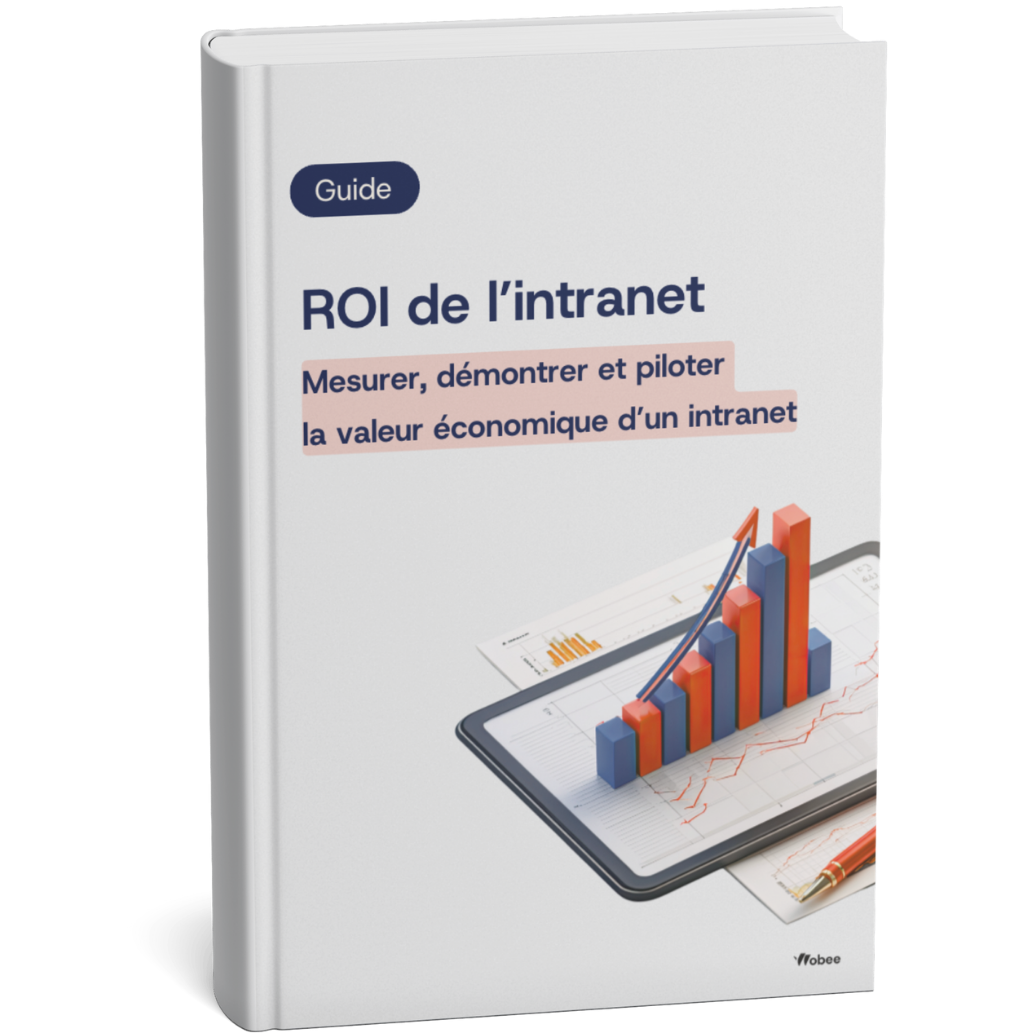
The project's overall ROI is measured by the reduction in turnover and the acceleration of integration. To explore these topics further, check out the dedicated articles on our specialized blog.
By unifying your tools and your communication, the employee hub transforms your digital ecosystem into a lever for lasting performance. Centralize your resources now to remove all digital friction and boost your teams' engagement. An integrated work environment is the key to seamless collaboration and a serene future.
The traditional intranet long served as a static repository for top-down information, where document search took precedence over interaction. By contrast, the employee hub stands out as a dynamic, two-way platform, designed to support the entire employee journey. Where the intranet merely stores, the hub engages and personalizes the experience based on each user's role and real needs.
Thanks to the integration of artificial intelligence, the hub goes beyond simple consultation to become a true proactive assistant. It is no longer limited to broadcasting content, but facilitates dialogue, recognition, and access to business tools, thus offering a living interface that adapts to the modern expectations of your teams.
The Human Resources Information System (HRIS) is a robust solution dedicated to administrative and strategic management, covering critical aspects such as payroll, contracts, and legal compliance. Its role is to structure the contractual framework of the working relationship. The employee hub, on the other hand, focuses on the daily experience and operational engagement of employees.
While the HRIS manages core data, the hub streamlines internal communication, access to training resources, and collaboration between departments. In short, the HRIS manages your talents' contracts, while the employee hub manages people and their fulfillment within your digital ecosystem.
The employee hub addresses the challenges of geographic dispersion by offering secure, mobile-first access to all resources. For your employees working remotely or in the field, it ensures the maintenance of the social bond and instant access to key information, without requiring them to be physically in the office or at a fixed workstation.
By centralizing collaboration tools and news feeds on a single interface, the hub reduces the digital fatigue caused by switching. It thus ensures genuine inclusion of all profiles, allowing everyone to stay connected to the company's vision, regardless of their location or time zone.
Adopting an employee hub generates substantial productivity gains by eliminating digital friction and automating recurring processes. The use of AI for semantic searches and common HR requests, such as leave management, frees up valuable time for your teams, allowing them to focus on high-value missions.
Beyond pure efficiency, this platform promotes faster skills development and significantly reduces the integration time for new arrivals. By simplifying the digital ecosystem and strengthening engagement, you'll see an improvement in talent retention and an overall optimization of your organization's performance.

 Télécharger la ressource
pour ne louper aucune de nos actus