


Read the article


You've probably noticed that some people seem naturally capable of managing their emotions and reading others. That's emotional intelligence.
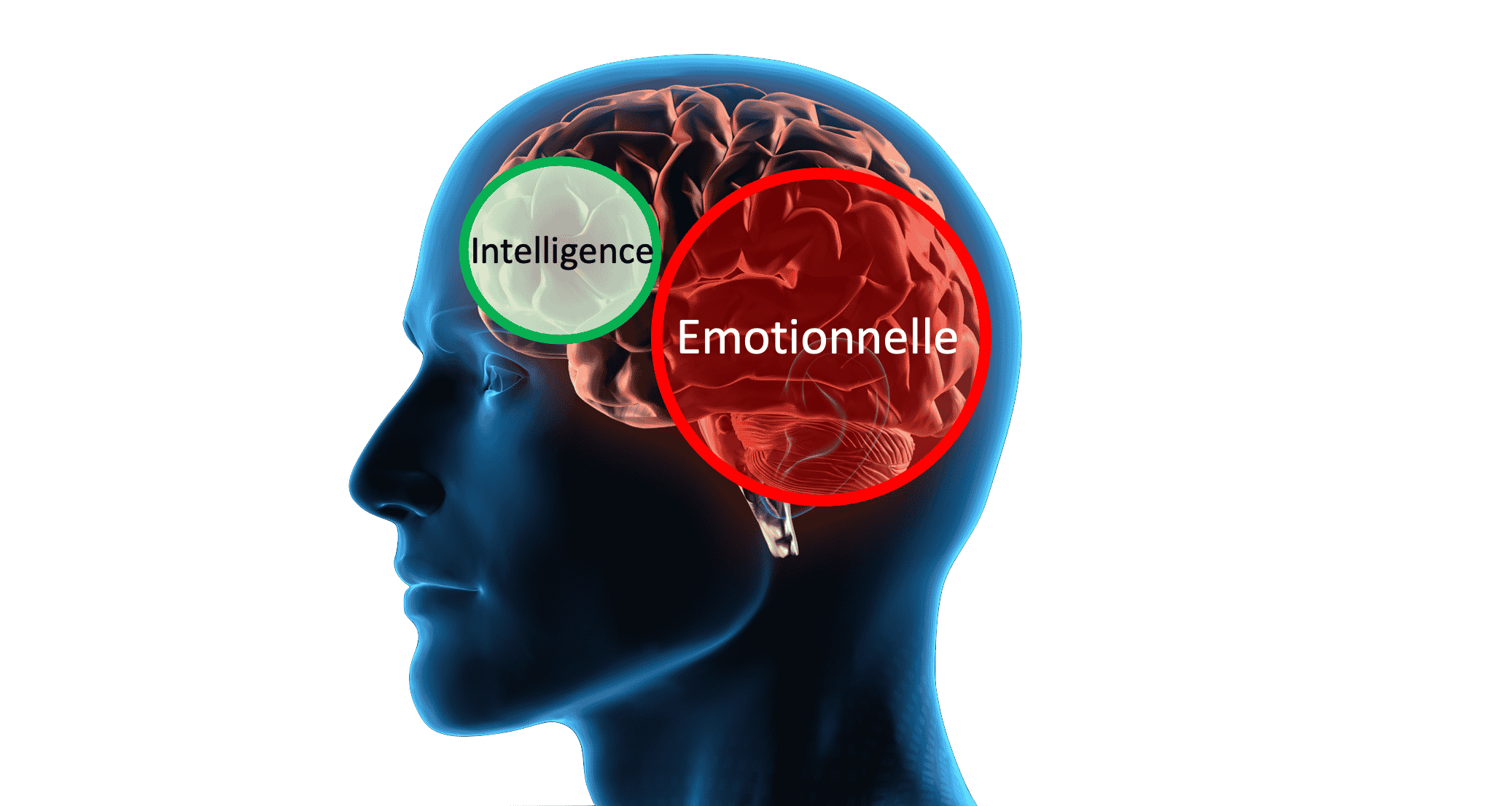
Emotional intelligence is much more than knowing if you're sad or happy.
It encompasses four essential abilities: perceiving emotions (yours and others'), understanding them in their context, expressing them appropriately, and mastering them to adapt your human behavior to a given situation.
Unlike intelligence quotient (IQ), which focuses on cognitive abilities, emotional intelligence is measured by emotional quotient (EQ). This distinction is major: IQ alone is not enough to evaluate social or relational intelligence. It ignores an entire part of human psychology related to our interactions with those around us, our colleagues or loved ones. Yet, in both professional and personal life, mastering emotions is an essential skill.
Peter Salovey and John Mayer, two American psychologists, were among the first to define emotional intelligence in the early 1990s, in an article published in New York. According to them, emotional intelligence is the ability to perceive, understand, regulate and express your emotions, while managing those of others. This model was later popularized by Daniel Goleman, then expanded by Howard Gardner, notably through his theory of multiple intelligences (including interpersonal intelligence and intrapersonal intelligence). Some models today even speak of a mixed model, integrating aspects of personality, artificial intelligence or social intelligence.
Concretely, emotional intelligence is based on five main pillars:
What makes this form of intelligence so valuable is that it can be developed. It can be strengthened through education, experience, practical tools, or targeted readings (for example the ISBN 978… of key works on the subject or a recent systematic review of its effects). Even an adult can learn it easily through regulation exercises, feedback from experience, or accompaniment by a specialized psychologist or coach.
Studies show that in a professional environment, strong emotional intelligence is often a sign of effective leadership, collective performance, and adaptation to change – where IQ is no longer enough. This is a point of view today widely shared, both in organizations and in scientific resources.
In France as elsewhere (cf. opinions left in France or resources relating to HR practices), there is growing awareness of the role of this form of intelligence in managing talent, stress, or sensitive situations.
So, if you're wondering why emotional intelligence at work is getting so much attention today, it's simple: it has become an essential key to human performance in a complex world. "More than IQ", as they say across the Atlantic.
Emotional intelligence literally transforms the lives of those who develop it. Research confirms it: people with high emotional intelligence navigate their relationships better and manage their daily stress more effectively.
The first benefit, and perhaps the most visible, concerns stress management. When you understand your emotions, you avoid the impulsive reactions that often make you regret your words or actions. This emotional control helps you stay calm in tense situations and make more thoughtful decisions. The result? Less burnout, less anxiety, and better self-esteem.
On the relationship side, the impact is just as remarkable. The empathy developed through emotional intelligence makes communication easier and helps resolve conflicts faster. At work, this translates into closer-knit teams and a calmer atmosphere. Emotionally intelligent people naturally build stronger bonds with their colleagues: a good way to prevent quiet quitting, for example.
In the professional sphere, the numbers speak for themselves: 85% of leaders' key skills depend on emotional intelligence. This ability to understand and positively influence others becomes a major asset for motivating a team and achieving better results. In fact, some studies suggest that emotional intelligence may be more decisive for professional success than traditional IQ.
Decision-making improves too. By taking into account both the rational and emotional aspects of a situation, you avoid biases (such as hiring biases) and make more balanced decisions. This approach also fosters adaptability to change, a valuable quality in our constantly evolving world.
Finally, emotional intelligence contributes to overall well-being. It has a positive influence on mental and even physical health, because better emotion management reduces tension and chronic stress.
But understanding the benefits of emotional intelligence is only the beginning: you still need to know how to put it into practice, whether in everyday life or at work.
Emotional intelligence has a place in every aspect of our lives, from personal relationships to professional challenges. Day to day, it helps us better manage our reactions to difficulties, communicate more effectively with those close to us, and adapt to unexpected changes. At work, it's a valuable asset for team management, conflict resolution, and delicate negotiations.
An emotionally intelligent leader radically transforms their team's dynamics. Daniel Goleman, a pioneer in the field, shows that emotional intelligence is a decisive factor in managerial success and significantly influences organizations' overall performance. Emotional intelligence is one of the main qualities of a good manager.
In practice, these leaders excel in several key areas. They know how to inspire and motivate their employees by understanding their individual needs. Their empathy allows them to detect tensions before they explode. And their emotional control helps them stay calm in difficult situations.
The numbers speak for themselves: teams led by managers with high emotional intelligence see their engagement rise by 50%. Turnover falls by 20 to 30%, while productivity climbs by 20 to 36%.
At Google, Project Oxygen showed that investing in managers' emotional intelligence increased employee satisfaction by 30% and cut turnover in half. Microsoft, under Satya Nadella's leadership, saw its productivity jump by 21% thanks to a more empathetic approach to leadership.
Emotional intelligence therefore fosters group dynamics, strengthens persuasion, and responds to employees' real needs.
Here are concrete methods to improve your emotional intelligence gradually and sustainably.
Start with yourself
The starting point is learning to know yourself better. Don't suppress your emotions when they arise. Instead, take the time to identify them and name them precisely. "I'm annoyed" can become "I feel frustrated because I can't make myself understood."
This precision in emotional vocabulary makes all the difference. The better you can put your feelings into words, the better you can manage them.
Develop emotional distance
Avoid quick judgments about situations or people. When something upsets you, step back. Put things into perspective. Is this reaction proportionate? Are there other ways to see the situation?
Also own your mistakes without beating yourself up. They are part of learning and help you understand yourself better.
Concrete techniques to adopt
Several practices can accelerate your development:
Work on your intuition and listening skills
Your intuition is a valuable guide. Learn to listen to it and trust your first impressions of people and situations. At the same time, develop your listening skills. Ask open-ended questions, rephrase what you hear, and show that you genuinely want to understand.
When to ask for help
Sometimes, deep emotional blocks hold back your development. Therapeutic support may then be necessary. A professional will help you identify and overcome these obstacles so you can fully develop your emotional intelligence.
The important thing is to start somewhere and be patient with yourself. Every small step counts.
But how can you know where you really stand on this journey, and measure your progress concretely? That's where various tools and tests come in, designed to assess your emotional intelligence and guide your progress.
Several reliable tools make it possible to assess your level of emotional intelligence accurately.
Performance tests such as the MSCEIT or the QEPro® measure your actual abilities. They present you with concrete situations and assess your responses against objective criteria. These tools are more reliable than simple self-assessment questionnaires.
The EQI (Emotional Quotient Inventory) test remains a benchmark. It measures emotional intelligence through 5 main components and requires a debrief with a certified coach to be truly effective. Likewise, the EQ-i 2.0 test provides a reliable assessment of emotional intelligence.
These tests generally analyze four key areas: self-awareness, self-management, social awareness, and relationship management. You get a detailed profile with your strengths and areas for improvement.
The advantage? These tools give you a solid foundation for building a personalized development plan. They also let you measure your progress over time. Allow 30 to 60 minutes to take a full test. To make the most of these tools and interpret your results correctly, it's essential to understand each of the emotional intelligence components they assess.
To understand emotional intelligence properly, you first need to know its different facets. These fundamental components, defined by Daniel Goleman, are the essential pillars that determine our ability to understand and manage our own emotions and those of others. Each of these dimensions plays a specific role in our ability to navigate our relationships and daily challenges successfully.
Empathy is the central pillar of emotional intelligence. This ability to perceive and understand other people's emotions radically transforms our daily interactions.
In practice, empathy takes two distinct forms. Emotional empathy makes us feel what the other person is going through. Cognitive empathy, on the other hand, allows us to understand their thoughts and feelings without necessarily experiencing them ourselves. This second form is particularly valuable in caregiving professions, where it protects against emotional exhaustion.
This skill offers a considerable advantage: it lets you anticipate other people's reactions. You can then adapt your communication, avoid misunderstandings, and improve your social and professional relationships. An empathetic manager detects tensions within their team more easily. An empathetic salesperson better understands customers' needs.
Research reveals fascinating aspects of empathy. A recent genetic study identified 11 loci linked to this ability. Around 10% of our differences in empathy come from our genes. The rest depends on our environment, upbringing, and experiences. Women generally have a higher empathy quotient, the result of combined biological and environmental factors.
In the workplace, empathy becomes a genuine performance lever. It strengthens trust within teams, facilitates collaboration, and improves conflict management. Companies led by empathetic managers record an employee retention rate 40% higher than the industry average. Employees feel better understood, more engaged, and therefore more productive.
The good news? Empathy can be developed. Techniques such as active listening, observing body language, and regular self-assessment help strengthen this skill. Every interaction then becomes an opportunity to improve your capacity for empathy.
Empathy is not monolithic. It splits into two distinct forms that work differently.
Emotional empathy literally makes you feel what the other person is going through. When your colleague is stressed, you feel that tension in your body. It's visceral and automatic. You genuinely share the emotion.
Cognitive empathy, on the other hand, stays at the level of intellectual understanding. You fully grasp that your colleague is stressed and why, but you keep your emotional distance. You analyze the situation without being overwhelmed by it.
This distinction changes everything in practice:
Both have their place. Emotional empathy excels at comforting and building connections. Cognitive empathy shines when you need to make rational decisions while taking others' emotions into account.
Developing both gives you a complete toolkit for navigating your relationships.
Three models have dominated research on emotional intelligence since the 1990s. Each brings its own vision of this skill.
The Mayer and Salovey model: the four branches
These two American researchers laid the theoretical foundations in 1990. They define emotional intelligence as a cognitive ability divided into four branches:
This model treats emotions as information. It emphasizes mental abilities rather than personality traits.
Daniel Goleman's model: the managerial approach
Goleman popularized the concept in 1995 with a broader approach. His model comprises five essential pillars that combine emotional abilities and social skills:
An interesting feature: according to Goleman, the part of the brain linked to emotional intelligence is the last to mature. It is shaped by repeated experiences throughout life.
The Bar-On model: emotional balance
In 1997, Reuven Bar-On proposed a model centered on emotional well-being. He identifies five main components:
This model is often used in occupational psychology to improve employee well-being.
Complementary approaches
These three models are not opposed. They shed light on different aspects of emotional intelligence. Mayer and Salovey focus on cognitive abilities. Goleman emphasizes practical application in the workplace. Bar-On focuses on personal balance.
Each model has given rise to specific measurement tools: the MSCEIT for Mayer and Salovey, the ECI for Goleman, and the EQ-i 2.0 for Bar-On.


so you never miss our news

