Lire l'article


Teamwork radically transforms the way we approach challenges in business. Discover its benefits and best practices.
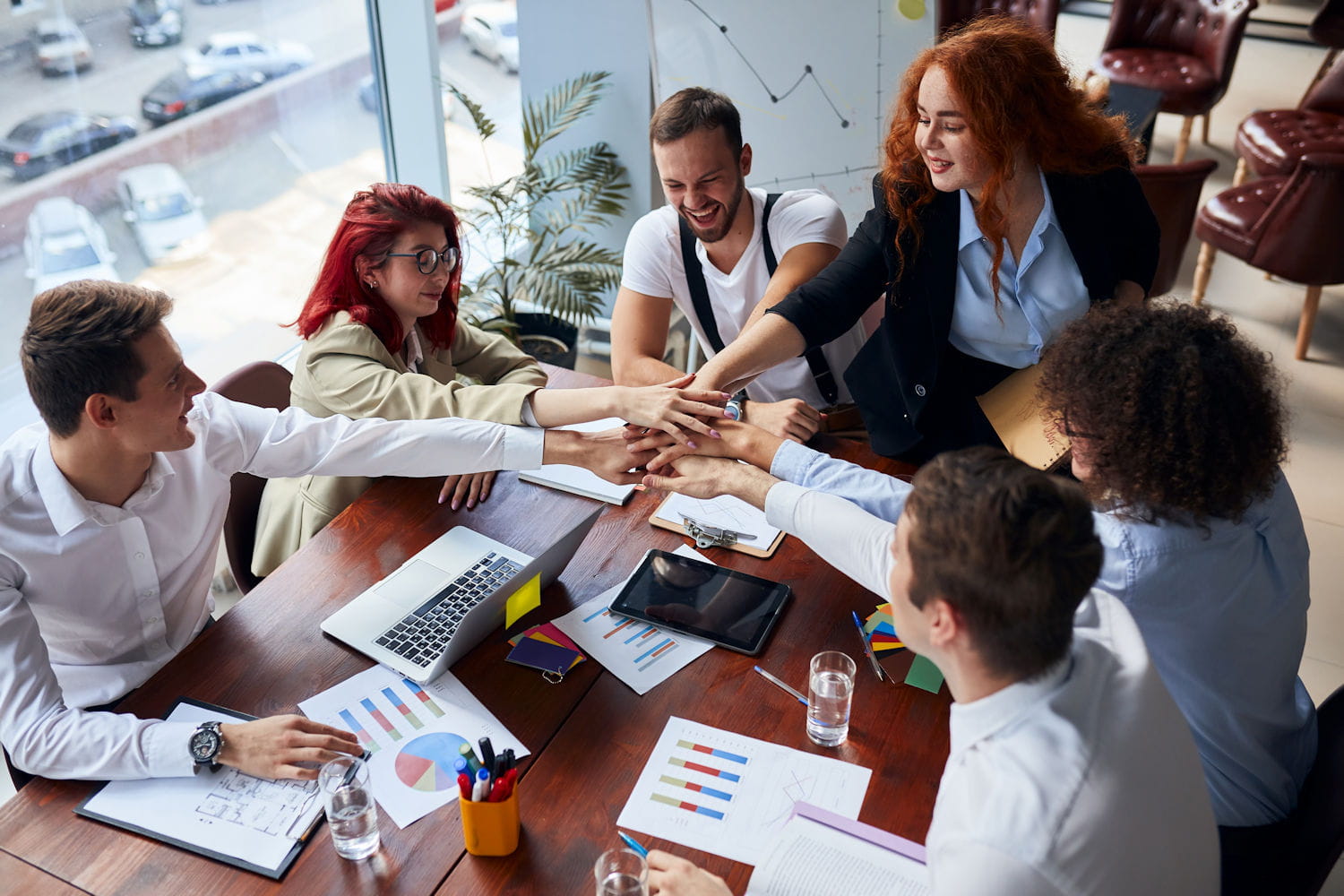
The diversity of profiles and talents within a work team is a fundamental element of innovation. Each team member, with their skills, professional experience and personal understanding of the issues, contributes to enriching collective reflection. This spirit of co-construction creates a stimulating work environment, where one can exchange freely in an open communication style.
The brainstorming, as a collaborative process, reveals its full potential in this framework: an idea launched can be taken up, improved, and transformed by other group members, fostering a group dynamic conducive to creation and solving complex problems.
Well-organized collaborative work allows us to optimize resources, work time and activity distribution. By leveraging each person's necessary skills, we reduce duplication, improve service or product quality, and achieve better productivity. This pooling of efforts makes it possible to achieve an objective more effectively and measurably.
When facing an obstacle, establishing a multidisciplinary group promotes rapid decision-making, supported by the diversity of opinions and functions represented. Each team member has their defined role in the team, which ensures smooth functioning and better management of difficulties encountered.
A united team strengthens the climate of trust and satisfaction at work. Company culture plays a key role here, by encouraging positive behaviors and mutual help. Team building, or any other activity promoting cohesion, creates a healthy professional environment where individual engagement is valued.
When an individual feels useful, recognized, supported and informed, they become more involved and contribute to a sustainable collaborative environment. This also promotes better talent retention, more stable employment levels and a strengthened company image.
Working in a group develops essential soft skills: listening, empathy, adaptability, stress management, and emotional intelligence. These cross-cutting skills, fundamental today in any profession, contribute to ongoing training of team members and improvement of collective functioning.
Encouraging collaboration within a team is also about establishing a virtuous model of performance, shared responsibility and continuous improvement, in respect of labor law and conditions set by the company.
Several human and relational skills prove particularly important in this professional context. Teamwork, a true collective engine, relies on the ability to communicate, share ideas, listen and adapt. An effective team is composed of members with complementary abilities, capable of accomplishing a task together despite obstacles or stress.
Not all team members function the same way. Some prefer facts and data (the rate, numbers, indicators), while others resonate more with team spirit, information sharing or the human dimension. Identifying the right type of message and the effective way to convey it strengthens the common dynamic.
Communicating also means knowing how to organize the right format at the right time: an email to formalize, a call to explain, a face-to-face exchange to resolve a difficulty or defuse a tension. This promotes smoother professional development, aligned with everyone's expectations.
Your body communicates as much as your words: your posture, your tone, your gaze are key pieces of information. In a professional setting, these signals reinforce or weaken the coherence of your message. They can also help resolve conflicts before they take hold.
Active listening, as defined by Roger Mucchielli, is a fundamental process of collective work. It involves accepting the other, fostering expression, asking open questions, knowing the limits of your viewpoint and reformulating to ensure mutual understanding. This practice encourages initiative, mutual help and respect for differences.
Conflict resolution requires recognizing the other's viewpoint, seeking a common interest and expressing disagreement without personal attack. It's a strong professional value that helps maintain a positive climate within the group.
Trust is a foundation of teamwork. It is not decreed: it is built through consistent actions, shared commitment and a shared operating model.
An environment that values error as learning, that accepts changes and promotes transparency is essential. It allows teams to see obstacles as steps, not as barriers.
For teamwork to become a real strength, you need:
Because a high-performing team is a team capable of achieving a goal together, by mobilizing talents, resources and shared values. And in this context, everyone finds their place, learns to "make something from their differences", and contributes to a sustainable dynamic where each person brings out the best in themselves.
Having the right skills is a start. But it's not enough for your team to truly become high-performing. What makes the difference is concrete methods, appropriate tools, and an ability to structure interactions around a defined and shared framework. It's not just about doing your personal work well, but creating a shared space where everyone can express their ideas, share their progress, and contribute to achieving collective objectives.
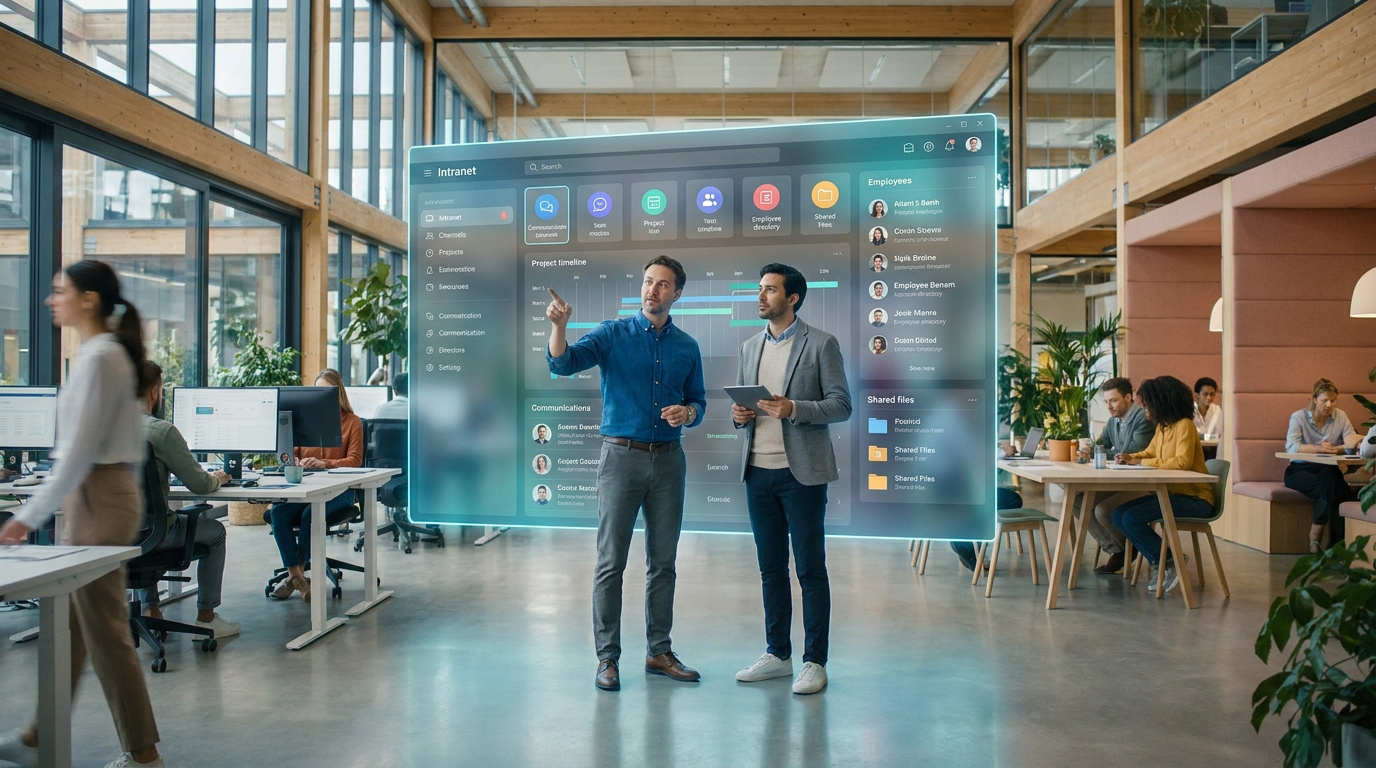
This involves well-organized meetings, with a clear agenda, an identified discussion leader, and real space given to each participant. But also the adoption of digital platforms suited to your actual situation: they facilitate information flow, teamwork whether remote or in-person, and idea sharing continuously, online and in-person.
The most important thing is to choose the right tools based on your type of organization, clear definition of your roles and responsibilities, and the collaboration model you want to encourage. Some teams will need a visual project management system, others will prefer structured chat, or weekly rituals to keep everyone aligned.
These tools are not an end in themselves, but powerful levers for developing your team members' potential, creating a positive dynamic, and strengthening human bonds in the collective. In short, they enable you to implement, in a measurable way, the fundamentals of an effective team: clarity, listening, coordination and trust.
Adopting the right tools also sends a strong signal: that of an organization taking collaboration seriously, valuing initiative, and seeing team cohesion as both a strategic lever and a human opportunity.
The right digital tools truly transform how your team works together. They centralize everything in one place: your exchanges, your documents, your tasks. No more juggling fifteen different applications.
For communication, Slack organizes your discussions by topic channels, while Microsoft Teams combines messaging and video conferencing. On the project management side, Trello offers a simple visual approach with its boards, while Asana manages more complex projects with its automation. Notion excels at creating shared knowledge bases, and Google Workspace lets you co-edit your documents in real-time.
The idea is to choose based on your real needs. A small creative team might prefer Trello and Slack. A larger team with complex projects will turn to Asana and Teams.
These tools concretely improve your productivity and coordination. They provide clear visibility into project progress and reduce email back-and-forth. Bonus: most integrate with each other, making your daily work even simpler.
Regular, well-structured meetings promote alignment of objectives. But be careful: a poorly organized meeting can quickly become a waste of time for everyone.
The key is preparation. Send a clear agenda 24 to 48 hours in advance, with specific objectives and time allocated to each point. Limit yourself to a maximum of 3-5 topics to stay focused. And most importantly, invite only people concerned with the decisions to be made.
During the meeting, appoint a facilitator to guide exchanges and respect schedules. Give everyone a voice, rephrase important points and refocus if it goes in all directions. One tip: test your technical tools before you start, especially on video calls.
The real difference happens afterward. Write a summary with decisions made and actions to take. Specify who does what and by when. Share it within 24 hours, otherwise good intentions evaporate.
For teams who see each other often, 15-minute stand-up meetings can replace some longer ones. It's effective for quick check-ins.
Good collaboration doesn't just happen, it's cultivated daily through concrete practices.
First, clarify each person's roles from the start. Who does what, when and how? This transparency prevents misunderstandings and duplication. Every member should know exactly what's expected and how their work connects with others'.
Next, create regular exchange moments beyond formal meetings. A shared coffee, lunch together or even an informal discussion channel allows you to build bonds. These interactions strengthen cohesion and facilitate problem-solving.
Also value collective achievements. When the team reaches an objective, take time to celebrate it together. This motivates and encourages future cooperation.
Finally, manage conflicts quickly and constructively. Disagreements are normal, but they shouldn't fester. Encourage the expression of different viewpoints and seek solutions together that work for everyone.
These simple practices gradually transform a group of people into a truly united and high-performing team.
Conflicts are an integral part of team life. They are neither rare nor necessarily negative: they are signals to be read intelligently. Rather than avoiding or minimizing them, high-performing teams learn to manage them proactively, drawing on tools, a posture and a shared company culture. This is where the role of manager, team leader or any driving team member takes on its full meaning.
The proactive management of conflicts is a key to a united and sustainable team. It preserves a positive work climate, strengthens cohesion among members, and maintains collective engagement. But this capability rests not only on procedures: it involves constant attention, an ability to read subtle signals, and a fine understanding of interpersonal dynamics. Through this approach, we can develop a team's potential, transforming tensions into learning opportunities.
It all starts with observation. Be attentive to what's happening within the group: tension in exchanges, unusual silences, repeated avoidance between colleagues, a drop in motivation, or personal withdrawal from a collective task. These signals, sometimes subtle, often reveal a deeper blockage. Intervening at these first signs allows you to act upstream and prevent the conflict from taking a more complex or destructive turn.
When tension becomes visible or a conflict breaks out, it's essential to step back to understand its true nature. Are we facing a relational conflict — personality clashes, misunderstandings, different communication styles — or an organizational conflict linked to poorly defined objectives, unclear task distribution, a workload imbalance, or an absent clear framework? This precise definition of the problem is decisive: it guides how you'll intervene, the line of action you'll choose, and the resources to mobilize.
An effective manager doesn't try to impose a solution, but creates the space for everyone to express their feelings, voice their needs, and accept the other's viewpoint. This sharing of ideas, in a secure and respectful context, often makes it possible to work through a tense situation successfully.
To do this, it's helpful to rely on structured methods:
This approach isn't just common sense: it's learned, structured and embodied. And the more it's practiced, the more natural it becomes for team members. It's part of the fundamentals of a collaborative culture, where everyone works together, including during tense moments. It's also what defines a mature team: not the absence of disagreements, but the ability to navigate them with respect, clarity, and a shared interest in mind.
Finally, how the conflict is managed sends a strong message to the entire team. If the resolution is fair, transparent and solution-oriented, it strengthens trust, a sense of psychological safety and the desire to be more involved. Conversely, an ignored or poorly handled conflict can harm atmosphere, damage collective performance, and weaken team dynamics in the long term.
Your mediator posture
Keep your neutrality. Listen to each party separately first, in a relaxed setting. The goal? Understand the facts and emotions without judgment. Let 1-2 days pass if tensions are high. Hot emotions harm constructive dialogue.
During the confrontation, set clear rules: mutual respect, equal speaking time, expression in first person rather than "you". Your role is to facilitate exchanges, not to decide.
Nonviolent communication in practice
Nonviolent communication (NVC) is based on the OSBD method: Observation, Feeling, Need, Request, to manage conflicts and improve relationships. Concretely:
This approach avoids accusations and promotes mutual understanding.
Resolution strategies
Depending on the situation, several options are available to you:
Avoidance may sometimes be justified, but be careful: ignoring a conflict rarely makes it disappear.
After resolution
The work doesn't stop there. Schedule regular follow-ups. Check that agreements are respected and relationships normalize. If necessary, adjust the organization: short joint projects, different task distribution.
In complex cases or if your neutrality is questioned, don't hesitate to call in an external mediator. Sometimes an outside perspective unblocks situations that seemed unsolvable.


pour ne louper aucune de nos actus