%20(1).webp)

.webp)
Lire l'article


Vous savez que votre entreprise doit adopter une démarche RSE, mais vous ne savez pas par où commencer ni comment structurer cette approche ? Pourtant, 80 % des consommateurs et 94 % des collaborateurs privilégient aujourd’hui les organisations engagées sur les enjeux sociaux et environnementaux. Dans cet article, vous découvrirez les étapes clés pour élaborer une stratégie RSE efficace, des exemples d’actions concrètes et les outils indispensables pour mesurer vos impacts.
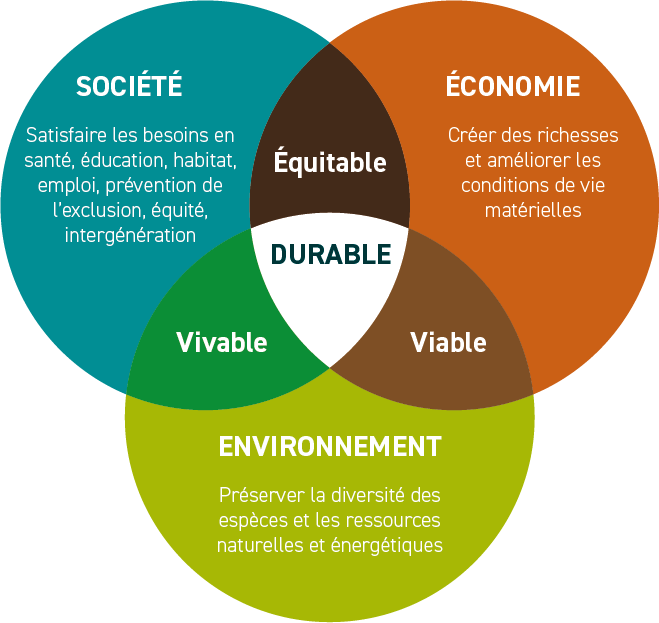
CSR, or Corporate Social Responsibility, is not just a passing trend: it's a real responsibility, at the heart of sustainable development challenges, touching economics, social, and political dimensions alike. It consists of voluntarily integrating social, environmental, and economic concerns into your business activities and relationships with all your stakeholders — internal and external.
Concretely, this means developing a more transversal, collaborative management approach oriented toward environmental and social impact. CSR invites you to rethink your economic model so it generates value across three dimensions: economic, social, and environmental – this is the principle of the Triple Bottom Line. It's therefore a true structuring program that can enable the company to better manage its resources, limit waste, respond to civil society expectations, and measure the impacts of its decisions.
This approach relies on precise indicators and frameworks like ISO 26000, but also on legal frameworks published on Legifrance, government decrees, or the European Commission recommendations. It's also supported by institutions such as Chamber of Commerce, the Ministry of Economy, or platforms like France Strategy or the National CSR Portal.
Through this collective construction, pioneering companies like Patagonia, Blablacar, or Carrefour Group have managed to identify stakeholders, conduct audits, implement specific actions, and improve their brand image. They thus show that a well-executed CSR policy can become a strategic lever and competitive advantage, while reducing greenhouse gas emissions, promoting health, employment, and combating social exclusion and respecting human rights.
Taking these dimensions into account not only enables action in favor of climate and the common good, but also enables alignment with a movement of voluntary commitment or respect for CSR obligations imposed by the legal framework. Tools like the Green Paper, applications, mappings, or resources from the Management Sup collection can guide companies in this mission.
Corporate Social Responsibility, or corporate social responsibility, is therefore a true forward-looking perspective, to modify the usual code of performance and integrate climate change, resource savings, and social interest. In short: an approach to manage differently, within a framework of sustainable development.
The CSR approach begins with identifying and prioritizing social, environmental, and economic issues relevant to your business. Not all CSR topics are equal depending on your industry. Materiality analysis is a key tool for prioritizing issues: it combines the importance of issues for your stakeholders with their impact on your business. This prioritization of CSR issues must also consider the economic opportunities they represent.
Customers, employees, suppliers, local communities... Everyone has a say in your CSR approach. Consulting with them helps you better understand their expectations and co-create relevant actions. This involvement also facilitates acceptance of change internally.
Once your priorities are established, set yourself measurable objectives with clear deadlines. For example: "Reduce our water consumption by 15% by 2025" rather than "Improve our water management". These indicators will allow you to track your progress and adjust course if necessary.
Your plan should mix "quick wins" (simple, low-cost actions with rapid results) and more ambitious long-term projects. This approach maintains team motivation while building sustainable transformation. Implementing a CSR approach can reduce operational costs through better resource management.
The success of your approach depends on allocating sufficient resources: budget, time, dedicated personnel. Leadership involvement is crucial to legitimize the approach and unlock necessary resources. Also plan employee training so they understand the issues and their role.
Regularly share your progress, difficulties, and results. This transparent communication strengthens your credibility and avoids greenwashing accusations. An annual CSR report remains an excellent way to take stock and set new objectives.
A truly functional CSR approach cannot be built in isolation. Your stakeholders - employees, customers, suppliers, local communities, associations - have specific expectations and concrete needs. Ignoring them risks missing what's essential.
Identifying and prioritizing your stakeholders
First step: draw up a complete list of your stakeholders. Internally, you have your employees, leaders, and union representatives. Externally, think about customers, suppliers, partners, local community, NGOs, and public institutions.
But be careful, they don't all carry the same weight in your approach. Mitchell's typology helps clarify this by analyzing three criteria: influence power, legitimacy of their requests, and urgency of their expectations. This framework allows you to prioritize your efforts and adapt your approach to each group.
Organizing constructive dialogue
Once your stakeholders are identified, it's time to dialogue. Individual interviews, surveys, focus groups, collective meetings: vary the formats depending on your audience. Consumers often prefer questionnaires and transparency. Associations appreciate participating in your events. With your suppliers, you can co-create solutions.
What matters? Really listen and adapt your interaction methods. A structured exchange plan with clear objectives, identified responsibilities, and defined frequency will help you navigate effectively.
Concretely involving your employees
Your employees are your primary CSR ambassadors. Inform them via a clear charter, organize practical workshops, even use gamification to make the topic more engaging. Many companies create a network of voluntary CSR contacts - 85% of CAC40 groups have done so.
Also remember to value their efforts. Simple recognition in your internal communication or a awards ceremony can work wonders to maintain motivation.
Validate your actions by third parties
Dialogue is good. But your stakeholders need concrete proof. Labels and certifications provide this external credibility that reassures. They validate that your commitments translate into measurable and verifiable actions.
This collaborative approach transforms your CSR into a truly shared project. Result: fewer reputational risks, more transparency, and stronger overall performance.
CSR materializes through measurable actions in three main areas.
Environment: reducing CO2 emissions through a carbon assessment, switching to renewable energy, optimizing waste management with selective sorting and eliminating plastic. Sustainable mobility encourages carpooling and electric vehicles.
Social: improving working conditions through ergonomic spaces, promoting diversity and equal pay, facilitating remote work with appropriate equipment.
Local engagement: supporting community initiatives, prioritizing local suppliers, skills-based sponsorship where employees share their expertise with associations.
Responsible purchasing now integrates total cost, social and environmental criteria in supplier selection. This approach extends to finance with Socially Responsible Investment (SRI), which uses extra-financial ratings based on ESG criteria.
Alignment with the Sustainable Development Goals (SDGs) guides these actions toward scientifically validated objectives, like those of Science Based Targets compliant with the Paris Agreement. For SMEs, adopting these practices becomes strategic given CSR requirements of large groups in their calls for tenders.
Measuring your CSR impacts starts with choosing the right indicators. The carbon assessment remains essential, but other metrics provide a complete picture: water footprint, global biodiversity score, or even AFMD's Inclusive Organizations Barometer to evaluate inclusion.
Life Cycle Assessment (LCA) goes further by measuring a product's impacts from design to end of life. This approach often reveals hidden impacts in the value chain.
To simplify reporting, the French CSR platform helps companies simulate their regulatory obligations. Specialized software like Sami or Plan A automate data collection and generate reports compliant with international standards (GRI, SASB).
Communicating these results requires sincerity. An effective CSR report presents both successes and challenges, with quantified data and SMART objectives. Using visuals (charts, infographics) makes information more accessible.
Beware of greenwashing: it's better to communicate about concrete and measurable actions than vague promises. Transparency strengthens stakeholder credibility and engagement.
CSR relies on an ecosystem of norms, labels, and regulations that frame and value company initiatives.
International reference standards
ISO 26000 is the worldwide reference for CSR. It provides guidelines for integrating corporate social responsibility into business strategy. Unlike other ISO standards, it's not certifying but offers a recognized methodological framework.
The UN Global Compact brings together over 15,000 companies around 10 fundamental principles. Signatories commit to respecting human rights, labor standards, environment, and fighting corruption. An annual report on progress achieved is mandatory.
For reporting, the Global Reporting Initiative (GRI) standardizes the publication of environmental and social information. Its standards facilitate comparison between companies and strengthen transparency.
CSR labels and certifications
Several labels allow companies to showcase their commitments:
These labels offer external recognition and strengthen credibility with stakeholders.
The French regulatory framework
France has progressively strengthened its legal obligations. The NRE law of 2001 was the first to require listed companies to publish social and environmental information.
The Grenelle II law requires all companies with more than 500 employees to conduct a carbon assessment, updating every three years.
More recently, the duty of care law (2017) requires large companies to establish a care plan. This plan must identify and prevent environmental, social, and corruption risks in their supply chains.
The 2019 PACTE law marks a turning point. It integrates into civil law the obligation for all French companies to consider environmental and social issues in their management.
European developments
The European CSRD directive (Corporate Sustainability Reporting Directive) significantly strengthens extra-financial reporting obligations. It extends the scope of companies concerned and harmonizes reporting standards across Europe.
Large companies must now publish a Statement of Extra-Financial Performance (DPEF), a detailed document on their ESG impacts.
Rating agencies and evaluation
Specialized agencies like Vigeo Eiris, OEKOM, or RobecoSAM evaluate companies' CSR performance. Their ratings influence investment decisions and direct financial flows toward the most responsible actors.
This normative and regulatory framework continues to evolve. It pushes companies toward greater transparency and concrete commitment in their CSR approach.
Yet despite this increasingly structured framework, CSR implementation on the ground raises many questions and reveals contradictions worthy of careful examination.
CSR in business is not a smooth journey. Despite good intentions, several obstacles hinder effective implementation.
The first challenge? Impact assessment. Concretely measuring the effect of your CSR actions requires time, specialized tools, and precise sectoral data. Many companies struggle to reconcile this long-term evaluation with pressure for immediate results.
Uneven adoption of reference frameworks also complicates matters. Not all companies use the same standards (GRI, ISO 26000...). Result: comparing CSR performance becomes a real puzzle.
Greenwashing represents a major risk. In France, the ARPP can sanction companies that communicate misleadingly about environmental commitments.
Organization-wise, integrating CSR data into an overall strategy remains complex. CSR reporting, though essential for stakeholder trust, requires substantial resources.
Fortunately, when governance truly integrates CSR, it promotes better decision-making and more effective risk management. ESG criteria (environmental, social, and governance) then become real performance evaluation tools.


pour ne louper aucune de nos actus

