


Lire l'article


Do you sometimes feel that your technical skills are no longer enough to thrive in your professional environment? Yet, according to psychologist Tasha Eurich, only 10-15% of individuals are truly aware of their emotions, even though this ability directly impacts work performance. In this article, discover what emotional intelligence really is, its concrete benefits in business, and practical methods to develop it.
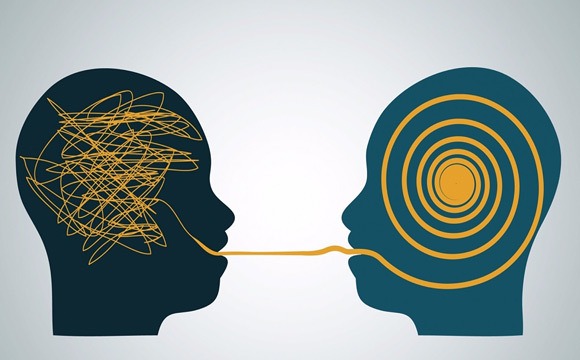
Emotional intelligence represents much more than a simple complement to your technical skills. It constitutes a true performance multiplier – a key factor in professional success – that can double the impact of your intellectual abilities on your employment and career.
Concretely, this form of intelligence – which psychologist Daniel Goleman widely popularized – explains 58% of your work performance, across all sectors. It's an emotional quotient as important as IQ, as confirmed by the work of Peter Salovey and John Mayer. No wonder 71% of recruiters now prioritize it over IQ during hiring, according to a recent study.
The numbers speak for themselves: emotional intelligence now ranks in the top 5 of soft skills most sought after by employers. It plays a decisive role in understanding, emotion management, and decision-making.
But why such enthusiasm? Because emotional intelligence acts as a catalyst on several fronts:
The stakes go beyond the individual level. For companies, developing employees' emotional intelligence becomes a strategic lever for business. Organizations that integrate this component into their culture see an improvement in work climate, a reduction in turnover, and better customer satisfaction.
In a rapidly changing professional world, between digital transformation, AI, and hybrid teams, emotional intelligence becomes crucial. It helps you keep pace, communicate effectively, and navigate smoothly through complex environments.
Emotional intelligence is built around four pillars, according to the models of Goleman, Salovey, and other experts like Howard Gardner in workplace psychology:
These pillars, well developed, improve your emotional quotient and strengthen your communication skills. In a collaborative workplace, they play a central role in collective performance.
Let's take two concrete examples:
These emotionally intelligent behaviors illustrate the ability to master your emotions, communicate with empathy, and demonstrate leadership without authoritarianism.
Various formats exist: coaching, training, EQ tests, educational videos, or online programs. The key is to track progress, assess achievements, and foster a culture of personal development.
Emotional intelligence concretely transforms the way we work and interact in the office.
The benefits are felt at every level — from the individual to the entire team — and are now recognized as a key factor in business success, on par with IQ. In France, it is even considered an essential skill for improving the work climate, promoting mental health, and developing emotionally intelligent leadership.
When you master your emotions, you handle pressure better. This is highlighted by the work of Daniel Goleman, who popularized the concept of emotional intelligence after Salovey and Mayer. People with high emotional intelligence know how to identify stress signals before they become unmanageable. They step back, adopt active thinking, breathe, and find solutions. This approach plays a crucial role in burnout prevention and effective decision-making. The result? Stable productivity, even during periods of intense pressure.
Interpersonal intelligence, described by Howard Gardner, is a key component of emotional intelligence. It enables better communication, avoids unnecessary conflicts, and creates positive relationships. Empathy changes everything in professional relationships. An emotionally intelligent manager, capable of active listening, identifying emotions, and using this information wisely, becomes a true coach for their team. In a healthy workplace, these skills strengthen trust, promote well-being, and reduce tensions.
Emotionally intelligent communication relies on active listening, rephrasing, taking emotions into account, and a nuanced understanding of context. This ability to express and recognize emotions, described by Peter Salovey and John Mayer, promotes buy-in, supports change, and improves the relational quotient within teams. It is now used in coaching, training, and in personal development for leaders. In France, many companies follow this path to build a more human corporate culture.
Conflicts are inevitable, but their emotional management makes all the difference. Rather than ignoring or fleeing tensions, employees with developed emotional intelligence know how to ask the right questions, understand perspectives, and promote constructive resolution. They can distinguish the real cause from apparent symptoms. By integrating this approach into management models or coaching, we strengthen interpersonal skills and improve the quality of exchanges, a factor in collective performance.
According to studies from the National Library of Medicine, effective emotional regulation leads to stress reduction, better collaboration, and increased productivity. In a project or organization, emotional intelligence becomes a strategic ally. It is useful for all employees, whether in a key position, in career transition, or applying for a new role. France Travail (the French employment agency) also emphasizes its value in employment. Assessing emotional quotient through a test or coaching tool helps take stock of your soft skills and develop emotional intelligence in a targeted way.
During times of crisis or transformation, these skills play an even more decisive role. Whether it's a strategy change, a reorganization, or rapid evolution linked to artificial intelligence, mastering emotions and understanding others remain powerful levers for success.
Because more than ever, in a world in motion, emotional intelligence is what makes the difference between a good employee and a true leader.
Good news: emotional intelligence is not fixed. Thanks to our brain's plasticity, we can develop it throughout our professional life, based on our goals, work environment, and needs. This skill is a true asset for every team member, as it improves social bonds, well-being, individual and collective motivation, and emotion regulation.
Several concrete methods exist to help develop this intrapersonal and emotional intelligence in business: personal practices like meditation or yoga, which strengthen self-knowledge, specialized technological tools that allow you to measure, regulate, or track the evolution of your emotions, or professional support through coaching, training, or co-development groups. It's about taking action regularly, stepping out of your comfort zone, creating a plan, and strengthening your emotional skills week after week. Learning to know yourself better means giving yourself the means to better manage others.
Wondering where you stand, what role this skill plays in your professional functioning? Several approaches allow you to assess your level of social and emotional intelligence at work.
Self-assessment is often the first step, the simplest and most accessible. Free online questionnaires exist that let you see how you react in different situations. These tools question you on four major components: self-awareness, self-control, social awareness, and relationship management.
To go further, psychometric tests like the EQ-i offer a more in-depth analysis, incorporating concrete scenarios. For example: how do you react when facing an angry colleague? How do you handle criticism from your manager? What effect do your words have on your interlocutors? These tests help identify your strengths, areas for improvement, and set up a structured personal development approach.
Another very effective approach: 360° feedback. This process involves gathering perceptions from multiple people in your professional environment — colleagues, manager, direct reports, even external partners — to get a comprehensive and structured view of your behaviors, relational style, and how your emotions and reactions are perceived by others.
By seeking this recognition of the emotions you trigger, you access a wealth of information often inaccessible through self-assessment alone. Attitudes you think are insignificant may be perceived as stress, coldness, or conversely as warmth and stability. This gap between perceived intention and actual effect is common, and 360° feedback precisely helps reduce this gap by offering you a collective mirror of your emotional posture.
It's an approach that requires courage, maturity, and genuine openness to change, as the feedback isn't always comfortable. But it's also an extremely powerful lever for adjusting your behavior, refining your communication, and better regulating your emotions in key interactions.
Ultimately, this process helps you adopt a more aligned posture, both with your own values and with the group's expectations, which strengthens the consistency and credibility of your emotional leadership. In other words, 360° feedback helps you make emotional intelligence an observable, measurable, and actively developed skill in your professional daily life.
The idea? Don't settle for a single method or rely on a subjective impression. It's essential to combine multiple approaches — self-assessment, 360° feedback, psychometric tests, field observation — to obtain a precise, nuanced, and dynamic view of your emotional skills. Because emotional intelligence isn't limited to staying calm: it encompasses our ability to recognize, understand, express, and regulate our emotions, as well as to identify and respond accurately to those of others.
In a professional world in constant transformation, marked by uncertainty, rapid changes, and the demand for collective performance, this skill becomes a true strategic lever. It helps better manage tensions, strengthen team cohesion, establish a climate of trust, nurture healthy and constructive communication, and make more clear-headed and aligned decisions.
Labeling this aptitude as a mere "soft skill" is therefore reductive: it's a key competency, at the intersection of psychology, leadership, collaboration, and performance. Better yet: it's a differentiating asset, both for advancing your career, promoting workplace well-being, and creating a sustainably human and effective work environment.


pour ne louper aucune de nos actus

